
How Modern Car Care Products Are Engineered
Quick Answer
Modern car care products are engineered systems, not single-purpose chemicals. Each formula has to satisfy several competing requirements at once — strong cleaning without stripping coatings, durable protection without streaking, gloss without dust attraction, and UV resistance without sling-off.
Solving any one of those is easy. Solving all of them inside a single stable, shelf-stable, user-friendly formula is the actual job — and it is what separates an engineered product from a generic one. The rest of this article explains the chemistry behind those tradeoffs.
Most car care marketing leans on a simple mental model: soap cleans, wax shines, towels dry. That model survives because it is approximately true and easy to remember. It also hides the fact that every product on a detailing shelf is a small piece of applied chemistry, designed to satisfy several competing requirements at once.
This article unpacks the formulation side of car care — the tradeoffs, the test methods, and the reasons modern detailing chemistry has diverged sharply from the wax-and-soap era. It is the hub for a four-article series on the specific chemistries behind washing, ceramic protection, tire and trim care, and interior cleaning.
The “competing requirements” problem
A formulator rarely gets to optimize a single property. The brief almost always reads like a constraint problem:
- Clean aggressively, but do not strip protective coatings.
- Add gloss, but do not attract dust.
- Resist UV degradation, but do not sling off a rotating tire.
- Remove fingerprints from a touchscreen, but do not damage its oleophobic top layer.
Each constraint pair is a chemistry conflict. High-pH degreasers clean fastest and hydrolyze SiO2 fastest. Glossy silicone oils on plastic trim look great and migrate onto the inside of the windshield. Heavy-bodied tire dressing polymers stick well in storage and fling onto the rocker panels at 60 mph. Low-surface-tension solvents wipe screens clean and dissolve the fluoropolymer coating that made the screen feel smooth in the first place.
Solving any one of these is easy. Solving all of them inside one stable, shelf-stable, user-friendly formula is the actual job.
Surfactant chemistry: the foundation of modern washing
Every car shampoo on the market relies on surfactants — molecules with a hydrophilic head and a hydrophobic tail. Below the critical micelle concentration (CMC), the molecules behave individually; above it, they aggregate into micelles that surround and lift soils away from the surface. Rosen’s Surfactants and Interfacial Phenomena (Wiley, 4th ed., 2012) remains the canonical reference here.
Two practical points fall out of that chemistry:
- Foam height is not the same as cleaning power. Foam stability extends dwell time, which gives surfactants more contact opportunity with the surface. ISO 696 specifies the standard test method for measuring that foam stability. A formula tuned for high, persistent foam is generally tuned for the slower-paced two-bucket and foam-cannon workflows that dominate enthusiast washing today.
- pH is the dominant variable for coating compatibility. Highly alkaline (pH > 11) traffic film removers and degreasers clean fastest because they saponify oils, but they also accelerate hydrolysis of silica networks. Coating manufacturers in the OEM clearcoat space (PPG, BASF) and aftermarket SiO2 space publish pH tolerance ranges in their technical data sheets, and these have driven the industry shift toward near-neutral wash chemistry.
The deeper dive on surfactants, foam, and ceramic-safe washing lives in How pH-Balanced Car Shampoo Protects Paint and Coatings.
SiO2 sol-gel chemistry: how spray ceramics actually bond
“Ceramic spray” is a marketing term applied to a chemistry that is well-described in the materials science literature: sol-gel silica. The reference text is Brinker and Scherer’s Sol-Gel Science: The Physics and Chemistry of Sol-Gel Processing (Academic Press, 1990). The short version: silane or siloxane precursors hydrolyze on contact with surface moisture, then condense into a crosslinked Si-O-Si network. The result is a thin, hard, hydrophobic film whose performance is measured by water contact angle (ASTM D7334), durability under UV (ASTM G154, SAE J2527), and chemical resistance (ASTM D7491).
Three things determine what a spray-on SiO2 product can and cannot do:
- Solids content. Professional coatings deposit thicker, denser films. Sprays trade thickness for ease of application.
- Carrier and solvent flash-off rate. Too fast and the user can’t level the product; too slow and it streaks. This is the single hardest variable to tune.
- Crosslink density at room-temperature cure. Spray products cure ambient; pro coatings often benefit from controlled humidity and temperature.
The honest framing — what spray SiO2 is good for, and what it isn’t — is in SiO2 Ceramic Spray Coatings Explained: Chemistry and Durability.
Rubber and trim: UV chemistry, not shine chemistry
Tire and trim products are the most misunderstood category in car care. The visible benefit is gloss; the actual job is UV and ozone protection.
Vulcanized rubber is a polymer network that degrades through three primary mechanisms — UV chain scission, ozone attack on unsaturated bonds, and thermal oxidation. ASTM D925 (staining), D1149 (ozone resistance), D573 (heat aging), and G154 (UV exposure) are the standardized test methods. Polymer Degradation and Stability (Elsevier) is the primary peer-reviewed venue for this research; Rodgers’ Rubber Compounding: Chemistry and Applications (CRC Press, 2nd ed., 2016) is the working reference.
The “sling-off” problem and the storage-separation behavior that confuses a lot of users are direct consequences of polymer settling in the bottle and rotational shear at the tire surface. Both are addressed in Why Tire Dressing Slings Off (and How UV Protectants Actually Work).
Interior surfaces: the hardest formulation target
A modern dashboard is a chemistry minefield. Soft-touch polyurethane coatings, plasticized PVC, polycarbonate touchscreens with fluoropolymer oleophobic top coats, anodized aluminum trim, and chrome-effect plating can all coexist within a 12-inch radius. Each one has different chemical tolerances:
- Soft-touch PU is sensitive to high-VOC solvents and strong solvents like acetone or aromatic hydrocarbons (ASTM D2240 hardness drift is a useful indicator of damage).
- Oleophobic touchscreen coatings degrade with isopropyl alcohol and ammonia. Both Corning (Gorilla Glass technical briefs) and OEM device manufacturers publish display-cleaning guidance against those solvents.
- Plasticized PVC loses plasticizers slowly to volatilization. Cosmetic dressings that contain solvents can accelerate that loss; the result is haze on the inside of the windshield.
- Antistatic agents are not optional for interiors that need to stay clean. The IEC 61340-5-1 standard is the reference for surface-resistivity targets.
The full breakdown is in How Interior Detailers Clean Without Damaging Modern Surfaces.
What “real-world testing” actually means
Manufacturer marketing leans heavily on phrases like “extensively tested.” In practice, a car care R&D program should produce documentation against named test methods. The short list:
| Test | Standard | What it measures |
|---|---|---|
| Surface tension | ASTM D1331 | Surfactant efficiency |
| Foam height | ISO 696 | Foam stability / dwell time |
| Water contact angle | ASTM D7334 | Hydrophobicity, ceramic durability proxy |
| UV exposure | ASTM G154 | Polymer degradation under UV-A/UV-B |
| Xenon-arc weathering | SAE J2527, ASTM G155 | Combined UV + heat + moisture aging |
| Ozone resistance | ASTM D1149 | Rubber crack resistance |
| Heat aging | ASTM D573 | Long-term polymer stability |
| Hardness | ASTM D2240 | Plastic and elastomer condition |
| Surface resistivity | IEC 61340-5-1 | Antistatic performance |
A manufacturer that cannot tell you which of these methods their formulas are tested against is, charitably, doing less engineering than the box implies.
How AMSOIL approaches the same set of problems
AMSOIL’s car care line — High-Foam Car Shampoo, Exterior Ceramic Spray, Tire and Trim Protectant, Interior Detailer — was developed inside the same chemistry organization that builds the company’s lubricants. The formulation choices behind each product, and the tradeoffs they target, are unpacked in the four linked articles above.
If you want to skip the chemistry and look at the products themselves, here are the four AMSOIL Car Care chemistries discussed above:
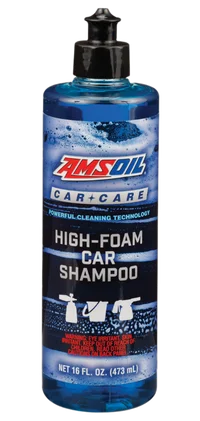
Product Code: HFBCN-EA
Join the Preferred Customer program to save approximately 25% off the retail price
National Synthetics is an authorized AMSOIL dealer. Links earn us a commission at no extra cost to you. Full disclosure
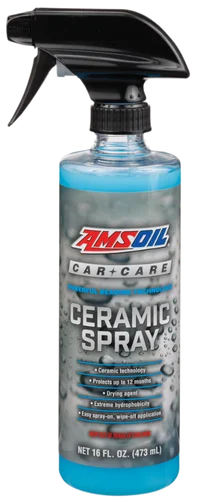
Product Code: CSFCN-EA
Join the Preferred Customer program to save approximately 25% off the retail price
National Synthetics is an authorized AMSOIL dealer. Links earn us a commission at no extra cost to you. Full disclosure
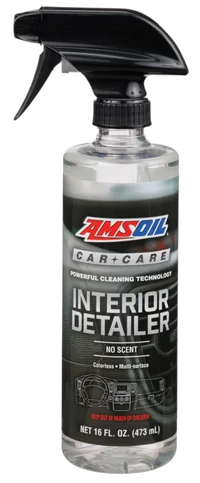
AMSOIL Interior Detailer - Scent Free
Product Code: IDNCN-EA
Join the Preferred Customer program to save approximately 25% off the retail price
National Synthetics is an authorized AMSOIL dealer. Links earn us a commission at no extra cost to you. Full disclosure
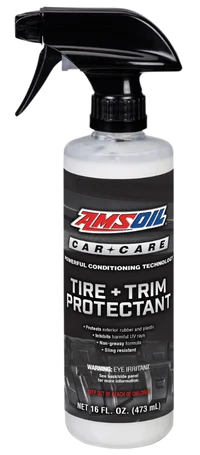
Product Code: TTPCN-EA
Join the Preferred Customer program to save approximately 25% off the retail price
National Synthetics is an authorized AMSOIL dealer. Links earn us a commission at no extra cost to you. Full disclosure
Each is covered in detail in its own article: High-Foam Car Shampoo (HFBCN-EA), Exterior Ceramic Spray (CSFCN-EA), Interior Detailer (IDNCN-EA), and Tire and Trim Protectant (TTPCN-EA).
Frequently Asked Questions
Why is car care formulation more complex than it looks?
Every formula has to satisfy at least two competing requirements at once — for example, cleaning power vs. coating safety, or surface gloss vs. dust attraction. Balancing those tradeoffs is what separates an engineered product from a generic one.
What standards are used to test detailing products?
Common reference methods include ASTM D1331 for surface tension, ISO 696 for foam height, ASTM D7334 for water contact angle, ASTM G154 for accelerated UV exposure, and SAE J2412 / J2527 for xenon-arc weathering. Reputable manufacturers use a mix of these alongside in-house panel testing.
Are pH-neutral car shampoos really safer for ceramic coatings?
Highly alkaline detergents accelerate hydrolysis of silica-based topcoats. Keeping wash chemistry close to neutral preserves the SiO2 network. Independent coating manufacturers publish pH tolerance ranges, and most spec a near-neutral wash medium for routine use.
What is the difference between SiO2 ceramic spray and a professional ceramic coating?
Both rely on silica chemistry, but professional coatings cure into thicker, denser, more crosslinked films and typically require controlled application conditions. Spray-on SiO2 products use lower solids, faster cure carriers, and target months — not years — of service life. They are different tools for different jobs.
References
- Rosen, M. J., and Kunjappu, J. T. Surfactants and Interfacial Phenomena. 4th ed., Wiley, 2012.
- Brinker, C. J., and Scherer, G. W. Sol-Gel Science: The Physics and Chemistry of Sol-Gel Processing. Academic Press, 1990.
- Rodgers, B. (ed.). Rubber Compounding: Chemistry and Applications. 2nd ed., CRC Press, 2016.
- ASTM International standards: D573, D1149, D1331, D2240, D7334, D7491, G154, G155.
- ISO 696: Surface active agents — Measurement of foaming power.
- SAE J2412, J2527: Accelerated weathering of automotive interior and exterior materials.
- IEC 61340-5-1: Electrostatics — Protection of electronic devices from electrostatic phenomena.
National Synthetics is operated by an Independent AMSOIL Dealer. Outbound product links use a dealer reference parameter for commission tracking; the educational content on this page is independent of that.

Protect Your Engine with AMSOIL
Experience the difference premium synthetic lubricants make. Shop with confidence through your authorized AMSOIL dealer.
Browse AMSOIL Products