
Toyota Tundra Engine Recall: The Complete V35A Main Bearing Failure Guide (2026)
If you own a 2022–2024 Toyota Tundra, a Lexus LX, or a 2024 Lexus GX, there’s a real chance your truck’s engine is under a federal safety recall right now — and depending on when your engine was built, the fix might be a brand-new engine, a software inspection, or “we’ll get back to you.”
Toyota has now issued three separate recalls for the same underlying problem in its 3.4-liter twin-turbo V35A engine: microscopic machining debris left inside the engine at the factory that can destroy the #1 main bearing. More than 270,000 trucks and SUVs are affected. Over 70,000 engines have already been replaced. And as of mid-2026, owners in the newest recall wave are still waiting to find out what their remedy even is.
This guide covers the full timeline, exactly which vehicles are affected, what’s actually failing inside the engine, how to check your VIN, and — because this is what we do — what the failure mechanics mean for your oil choices while you wait.
Which Toyota and Lexus vehicles are recalled for engine failure?
The V35A recalls cover 2022–2024 Toyota Tundra, 2022–2024 Lexus LX, and 2024 Lexus GX vehicles equipped with the 3.4L twin-turbocharged V35A-FTS V6, across three NHTSA campaigns:
| Recall | Filed | Vehicles | Coverage | Remedy |
|---|---|---|---|---|
| 24V-381 | May 2024 | ~102,000 | 2022–2023 Tundra, 2022–2023 Lexus LX | Engine replacement |
| 25V-767 | November 2025 | ~126,691 | 2022–2024 Tundra, 2022–2024 LX, 2024 GX (vehicles not covered by 24V-381) | Announced later: inspection-based (see below) |
| 26V320 | May 2026 | ~43,566 | 2024 Tundra built at Toyota’s Alabama plant (TMMAL), Feb 7 – Aug 5, 2024 | Under development at filing; owner letters mailed starting July 6, 2026 |
Toyota’s campaign numbers for the newest recall are 25TB14 / 25TA14. Engines built with the redesigned #1 main bearing (production from July 2024 onward, and all replacement engines) are not part of the recall population, though Toyota says it continues to monitor them.
Canadian owners: Transport Canada runs mirror campaigns for the same vehicles. Check your VIN through Transport Canada’s recall database or Toyota Canada — the affected engines and failure mode are identical.
What is actually failing in the V35A engine?
The short answer: machining debris left over from manufacturing can stick to the crankshaft’s #1 main bearing, and under sustained high load, the bearing fails.
Here’s the longer version. Every crankshaft rides on main bearings — thin shells that maintain a microscopic film of pressurized oil between the spinning crank journal and the engine block. That oil film is the only thing preventing metal-to-metal contact at thousands of RPM.
According to Toyota’s NHTSA filings, during a specific production window, metal debris of a particular size and amount wasn’t fully cleared from engines during assembly. If that debris migrates to and adheres to the #1 main bearing (the front-most bearing, closest to the timing chain), continued operation at higher loads progressively wears the bearing until it fails.
Toyota’s own teardown investigation added a critical detail: the company studied a cam housing clearance change and found a stack-up of bearing pressure driven by timing chain tension and engine loading. In plain English — the front of the crankshaft is being loaded by the timing chain at the same bearing where debris tends to land. Under heavy towing, high heat, or sustained load, the oil film at that bearing is squeezed hardest exactly where it can least afford contamination.
When the bearing lets go, owners report:
- Engine knocking (the classic rod-knock/main-knock hammering)
- Rough running
- No-start conditions
- Sudden engine stall while driving — which is why NHTSA classifies this as a crash risk
What is Toyota’s fix — and why are owners upset?
For the May 2024 recall population, the fix is a full engine replacement. For newer waves, Toyota switched to a software-based inspection — and only engines that fail the inspection get replaced.
In a June 15, 2026 update filed with NHTSA, Toyota described the new protocol: dealers use inspection software that measures the resonant frequency of the front of the crankshaft to assess the condition of the #1 main bearing, combined with vehicle drive data to confirm the engine has seen enough load for the assessment to be meaningful. If the software can’t confirm the bearing is free from abnormal wear, the dealer replaces the engine free of charge.
Toyota has already replaced more than 70,000 engines, and vehicles from the original 2024 recall still get replacements outright. But for everyone else, the era of automatic new engines is over — and the Tundra owner community has been vocal about it. Owner groups have publicly called on Toyota to reconsider, arguing the inspection approach is about slowing the financial bleeding rather than addressing what they believe is an inherent design issue. Toyota has not acknowledged any design flaw and continues building the V35A today.
For owners in the newest recall (26V320), it’s worse: the remedy was still under development when the recall was filed. Notification letters started going out July 6, 2026, telling owners they’ll be contacted again when the fix is ready. If you’re in that group, you’re driving an engine Toyota has formally told the federal government might fail — with no repair date on the calendar.
How do I check if my Tundra or Lexus is recalled?
Run your 17-digit VIN through NHTSA’s recall lookup at nhtsa.gov/recalls, or Toyota’s own tool at toyota.com/recall. Canadian owners: use Transport Canada’s Motor Vehicle Safety Recalls Database or Toyota.ca.
Do this even if you haven’t received a letter. Notification mailings for 26V320 run through late July 2026, letters get lost, and used-truck buyers frequently never get notified at all. If you’re shopping for a used 2022–2024 Tundra right now, checking the VIN — and asking for documentation of a completed engine replacement — should be non-negotiable.
Three more steps worth taking:
- Document everything. Service records, oil change receipts, any tickets or knocking complaints. If your engine fails, or if you end up in a lemon-law or reimbursement situation, paper wins.
- Report symptoms immediately. Knocking, rough running, or metal in the oil? Get it to a dealer and insist it’s documented against the recall campaign number.
- Save pre-notification repair receipts. Toyota’s recall filings include reimbursement provisions for owners who paid out of pocket for this failure before the recall.
Can motor oil prevent the V35A bearing failure?
No — and anyone who tells you otherwise is selling snake oil. The root cause is manufacturing debris inside the engine. No lubricant removes embedded debris from a bearing, and nothing in a bottle un-machines metal chips. If your engine has the defect, the recall remedy is the fix.
Here’s what is true, straight from the failure mechanics: this is an oil film failure mode. The bearing dies when the oil film between the journal and the bearing shell collapses under a combination of debris contamination, chain-tension pressure stack-up, and high load. Everything that preserves film thickness and strength at that bearing buys margin. Everything that thins or degrades the film removes margin.
That means three things you actually control:
Oil quality and film strength. The Tundra specs 0W-20. Within that grade, oils differ enormously in film strength, shear stability, and resistance to viscosity loss at high temperature. A premium full synthetic like AMSOIL Signature Series 0W-20 is engineered to hold its protective film under exactly the sustained heat and load conditions — towing, hauling, hot-weather grades — that Toyota’s own investigation identified as the stress scenario for the #1 main bearing. Full specs, applications, and sizes are on our Signature Series 0W-20 page. We covered how oil film protects bearings under load in our valvetrain deep-dive, and the same hydrodynamic principles apply at the crank.
Oil and filter change discipline. This defect is a debris problem. Fresh oil and a quality filter are your circulation system’s only debris management. If you’re towing with a recalled-but-not-yet-remedied truck, running severe-service intervals rather than the maximum schedule is cheap insurance. And when you change the oil, look at it: cut or inspect the filter, and check the drain pan for glitter. Fine silver metallic flakes are the calling card of bearing wear — that’s evidence your dealer needs to see before the bearing lets go on the highway.
Load management while you wait. Toyota’s filings tie failure progression to “continued operation at higher loads.” If you’re in recall 26V320’s no-remedy-yet window, easing off maximum tow loads in high heat isn’t paranoia — it’s reading the recall report.
One thing we won’t tell you to do: jump viscosity grades on your own. GM’s 6.2L recall made headlines by officially moving trucks from 0W-20 to 0W-40 — we broke down that saga in our GM L87 recall analysis — but that was a manufacturer-directed spec change. Toyota has issued no such directive for the V35A. Stay in spec, buy the best oil within spec, and let the documented recall process handle the hardware.
Protecting a V35A while you wait on Toyota?
Stay in the factory 0W-20 spec — just run the strongest film within it, and change it on the severe-service schedule. That is the whole play, and it’s the honest one.
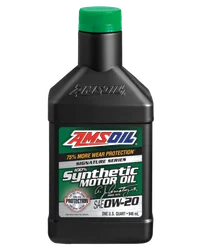
AMSOIL Signature Series 0W-20 100% Synthetic Motor Oil
Product Code: ASMQT-EA
Join the Preferred Customer program to save approximately 25% off the retail price
National Synthetics is an authorized AMSOIL dealer. Links earn us a commission at no extra cost to you. Full disclosure
Is the Tundra’s twin-turbo V6 reliable long-term?
The V35A situation is a manufacturing quality failure, not proof that the engine architecture is doomed — but the trust damage is real. Toyota replaced the legendarily durable 5.7L V8 with this engine in 2022, and three recalls in three years is exactly the wrong way to introduce a downsized, high-pressure, twin-turbo powerplant to the most reliability-obsessed truck buyers on Earth.
The honest read as of mid-2026: engines built after the July 2024 bearing redesign, and all replacement engines, carry the updated #1 main bearing and are not in any recall population. Toyota says it’s monitoring them. Whether the redesign fully closes the book — or whether a fourth wave comes — is something nobody outside Toyota can promise you. That uncertainty is exactly why documentation, oil discipline, and attentive maintenance matter more for this truck than for any Tundra before it.
Frequently asked questions
What years of Toyota Tundra are recalled for engine failure?
2022-2024 Tundras are covered across recalls 24V-381, 25V-767, and 26V320, along with 2022-2024 Lexus LX and 2024 Lexus GX models with the same V35A engine. The newest recall (May 2026) covers roughly 43,566 2024 Tundras built at Toyota's Alabama plant between February 7 and August 5, 2024. Check your VIN at nhtsa.gov/recalls.
Will Toyota replace my Tundra's engine?
If your truck is in the original May 2024 recall, yes — engine replacement is the remedy, and over 70,000 engines have been replaced. For later recall waves, dealers now run a resonant-frequency inspection of the #1 main bearing; only engines that fail the inspection are replaced. All recall work is free.
What are the symptoms of V35A engine failure?
Engine knocking, rough running, failure to start, or a sudden stall while driving. Fine metallic flakes in the oil or oil filter are an early warning sign of bearing wear — document them with your dealer immediately.
Can I still drive my recalled Tundra?
Toyota has not issued a stop-drive order for these recalls. That said, the failure mode progresses under high load — if your truck is awaiting inspection or remedy, moderating heavy towing in extreme heat and staying on top of oil changes is prudent. Any knocking or stalling means stop driving and call the dealer.
What oil does the Toyota Tundra V35A take?
Toyota specifies SAE 0W-20 for the V35A. A high-film-strength full synthetic 0W-20 — such as AMSOIL Signature Series — maximizes bearing protection within the factory spec, particularly under towing and hot-weather loads. Oil cannot fix the recall defect, but oil quality and change discipline directly affect how much protective margin the #1 main bearing has.
Does this recall affect Canadian Tundras?
Yes. Transport Canada administers mirror campaigns for Canadian-market Tundra, LX, and GX vehicles with the same engines. Canadian owners should check their VIN through Transport Canada's recall database or Toyota Canada.
Sources: NHTSA Part 573 Safety Recall Reports 24V-381, 25V-767, and 26V320; Toyota remedy update filed with NHTSA June 15, 2026.
Have a V35A story — a replacement that went smoothly, an inspection you don’t trust, metal in your filter? We’re tracking this recall closely and will keep this guide updated as Toyota finalizes the 26V320 remedy.
Disclaimer: This article is for informational purposes only. Always follow manufacturer recommendations and recall instructions. AMSOIL INC. is not affiliated with Toyota Motor Corporation. All trademarks are property of their respective owners.

Protect Your Engine with AMSOIL
Experience the difference premium synthetic lubricants make. Shop with confidence through your authorized AMSOIL dealer.
Browse AMSOIL Products