
What Is a Valvetrain? Components, How It Works, and How to Protect It
Update — April 2026
This article has been substantially rewritten and expanded. New coverage includes overhead-valve (OHV) vs single and dual overhead-cam (SOHC / DOHC) layouts, variable valve timing (VVT), timing-chain stretch, hydraulic lifter tick, and the specific lubrication challenges that drive each of those failure modes.
Every factual claim is now backed by an industry-standard test, an API / ILSAC / SAE specification, or an AMSOIL-published test result, with sources listed in the References section at the bottom of the page.
The valvetrain is one of the most lubrication-sensitive systems in a modern engine — and one of the most misunderstood. This guide explains what a valvetrain is, how it works, the real-world problems that show up when it wears, and what you can do to protect it.
What Is a Valvetrain?
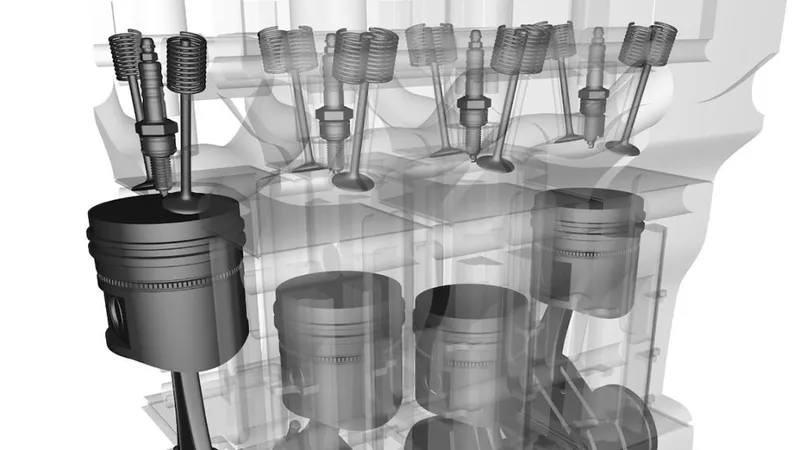
A valvetrain is the group of parts that opens and closes the intake and exhaust valves in an internal combustion engine, in precise time with piston motion. It is how the engine breathes.
The main pieces are:
- The camshaft
- The timing chain or timing belt that drives the cam from the crankshaft
- Lifters (also called tappets or followers)
- Pushrods and rocker arms (in overhead-valve designs)
- Valve springs
- The intake and exhaust valves themselves
If the valvetrain is off by even a few crankshaft degrees, the engine loses power, runs rough, misfires, trips codes, or — in an interference engine with a broken timing belt — bends valves against pistons.
How a Valvetrain Works (Step by Step)
- The crankshaft turns and, through a timing chain or belt, drives the camshaft at exactly half crankshaft speed (four-stroke engines fire once every two crank revolutions).
- As the camshaft rotates, its lobes push against a follower — either a hydraulic or solid lifter, a roller follower, or a bucket tappet.
- In an overhead-valve (pushrod) engine, the lifter lifts a pushrod, which pivots a rocker arm, which presses down on the valve stem. In an overhead-cam engine, the cam lobe acts on the follower directly — no pushrod required.
- The valve opens against its spring, air and fuel enter (or exhaust leaves) the combustion chamber, and the spring snaps the valve shut again as the cam lobe rotates past.
- On engines with variable valve timing (VVT), engine oil is routed through a solenoid into a phaser on the cam sprocket, which hydraulically rotates the cam relative to the crank to change when the valves open — improving power, efficiency, and emissions across the RPM range.5
The Main Valvetrain Components
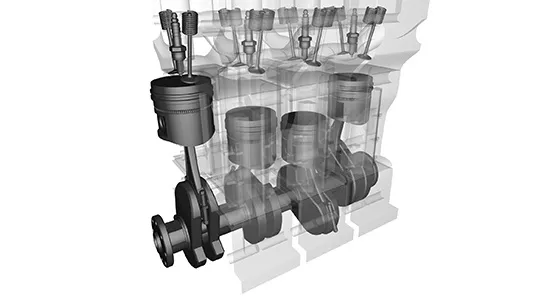
Camshaft
The camshaft is a rotating shaft with egg-shaped lobes. The shape of each lobe dictates how far the valve opens (lift), how long it stays open (duration), and when it opens relative to piston position (timing). Cams live either in the block (pushrod / OHV engines) or in the cylinder head (overhead-cam engines).
Timing Chain or Timing Belt
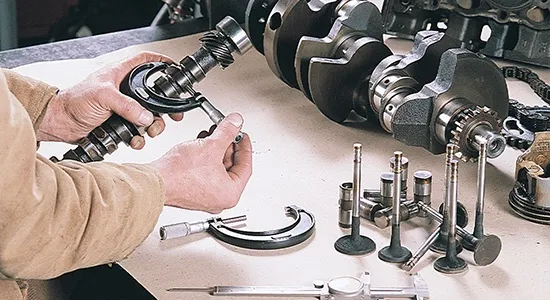
The timing chain (metal, inside the engine, runs in oil) or timing belt (rubber, external, runs dry) keeps the cam and crank in phase. Belts are generally quieter but must be replaced at the mileage interval in the owner’s manual. Chains are typically lifetime components — but they stretch with poor lubrication and can throw cam/crank correlation codes when they do.
Lifters, Tappets, and Followers
The lifter is the first point of cam contact. Most modern engines use hydraulic lifters, which use a small reservoir of engine oil to zero out valve lash automatically — quieter and maintenance-free, but sensitive to oil pressure, aeration, and cleanliness. Performance engines may use solid or roller lifters. The cam-to-lifter interface is the highest-contact-stress point in the entire engine and runs in boundary lubrication at startup.6
Pushrods
Pushrods connect the lifter to the rocker arm on pushrod (OHV) engines. They transmit the cam motion up through the block to the cylinder head.
Rocker Arms
Rocker arms pivot like a seesaw: when the pushrod or cam lobe lifts one end, the other end pushes the valve open.
Valve Springs
Valve springs snap each valve closed once the cam lobe has rotated past. The spring is what keeps the follower in contact with the cam lobe at high RPM — without enough spring pressure, the follower loses contact and the engine goes into valve float.
Intake and Exhaust Valves
The valves themselves seal the combustion chamber and are what the entire valvetrain exists to control. Exhaust valves operate at red-hot temperatures (well above 1,200 °F / 650 °C) and rely on transferring heat through the valve seat to the head for survival.
Variable Valve Timing (VVT) Phasers and Solenoids
VVT is standard on nearly every new engine sold in North America. A VVT system uses engine oil pressure — controlled by an ECU-commanded solenoid — to rotate a phaser mounted on the cam sprocket. The phaser changes valve timing on the fly. The tolerances inside a VVT solenoid are extremely tight, which is why dirty, thickened, or sludged oil is a leading cause of VVT faults.5
Types of Valvetrains: OHV vs SOHC vs DOHC
| Layout | Where the Cam Lives | How It Actuates the Valves |
|---|---|---|
| OHV (Overhead Valve / Pushrod) | In the engine block | Via lifter → pushrod → rocker arm → valve |
| SOHC (Single Overhead Cam) | One cam in each cylinder head | Cam acts directly on follower / rocker → valve |
| DOHC (Dual Overhead Cam) | Two cams per head — one for intakes, one for exhausts | Each cam acts directly on its own followers / valves |
OHV engines are compact, strong, and cheap to build — which is why American V8s (LS, LT, Gen III Hemi, Ford Coyote’s predecessor Modular) have long used them. DOHC engines allow more valves per cylinder (typically four) and higher-RPM breathing, which is why virtually every modern four- and six-cylinder is DOHC.
None of these layouts is inherently more reliable than the others. All of them live and die on lubrication quality.
Common Valvetrain Problems (and What They Sound Like)
Cold-Start / Hydraulic Lifter Tick
A rhythmic ticking from the top of the engine that is loudest for the first few seconds after startup. Usually caused by hydraulic lifters that have bled down overnight and are not re-filling with oil quickly enough — which points at oil that is too thin, aerated, contaminated, or simply dirty. Persistent tick after warm-up indicates collapsed lifters or cam/lifter wear.
Timing Chain Stretch and Cam/Crank Correlation Codes
A stretched chain throws off the valve timing the ECU expects. Typical symptoms are a rattle at cold start, rough idle, and P0008 / P0016 / P0017 cam-correlation codes. Chain stretch is accelerated by long oil-change intervals, fuel dilution, and shearing of low-quality oil.
VVT Solenoid or Phaser Issues
Symptoms range from rough idle, poor fuel economy, and hesitation at part-throttle to hard codes for VVT actuator performance. The fix is often as simple as changing the oil with a high-quality synthetic and (on some engines) cleaning the solenoid screen — confirming that valvetrain health and oil cleanliness are inseparable.6
Valve Float at High RPM
Valve float happens when the valve spring can’t keep up with the cam at high engine speed — the follower loses contact with the cam lobe, the valve closes late (or bounces open), and the engine loses power. Severe valve float causes piston-to-valve contact and catastrophic damage. Correct valve spring pressure and fresh, full-viscosity oil are the primary defenses.
GDI Intake-Valve Carbon Buildup
Gasoline direct-injection (GDI) engines spray fuel straight into the cylinder, so the back of the intake valves never gets washed by fuel detergents the way it does on a port-injected engine. Over time, PCV vapors and EGR soot bake onto the intake valves as hard carbon, restricting airflow and causing misfires and cold-start stumble.
Cam Lobe and Lifter Wear
The cam-to-lifter contact point is the highest-pressure, boundary-lubrication zone in the engine. Wear there shows up as a ticking lifter, a misfire on one cylinder, and eventually visible lobe rounding on teardown. Flat-tappet cams — common on classic OHV engines — are especially sensitive to ZDDP (zinc and phosphorus) anti-wear additive levels.7
The Lubrication Challenges Inside a Valvetrain
Every failure mode above traces back to one of three lubrication realities:
- The cam-lifter interface operates in boundary lubrication. At startup and at peak lobe lift, the contact patch is too small and pressures too high for a full hydrodynamic oil film. Protection depends on the oil’s anti-wear chemistry — especially ZDDP — actively reacting with the metal surface to form a protective tribofilm.6,7 That chemistry is what modern ILSAC GF-6 and API SP service categories specify minimums for.7
- Hydraulic lifters and VVT phasers are oil-powered actuators. They depend on clean, non-aerated, correctly-viscous oil at operating temperature. Thickened or sludged oil blocks tight-tolerance passages; aerated oil compresses; sheared oil loses film thickness. Any of those causes lifter tick, VVT faults, or both.5
- The top end runs hot and deposit-prone. Valves, valve guides, valve stems, and seats see combustion heat directly. Oil in the top end is exposed to blow-by gases, fuel dilution, and (in GDI engines) soot. That accelerates oxidation, varnish, and deposit formation — which is why API SP and ILSAC GF-6 both tightened limits for oxidation resistance, deposits, and LSPI (low-speed pre-ignition) prevention.7
A valvetrain protected by an oil that addresses all three — boundary-lubrication wear, cleanliness, and thermal/oxidative stability — will typically run for hundreds of thousands of miles. A valvetrain starved of any one of them will not.
How AMSOIL Helps Your Valvetrain
AMSOIL Signature Series 100% Synthetic Motor Oil
AMSOIL Signature Series is engineered to exceed API SP and ILSAC GF-6 requirements. In the ASTM D6891 Sequence IVA wear test — the industry-standard cam lobe wear test used by API and ILSAC — Signature Series 0W-20 provides 75% more wear protection than the maximum cam lobe wear allowed by the specification.1 That directly protects the cam/lifter interface where most valvetrain wear occurs.
AMSOIL P.i. Performance Improver
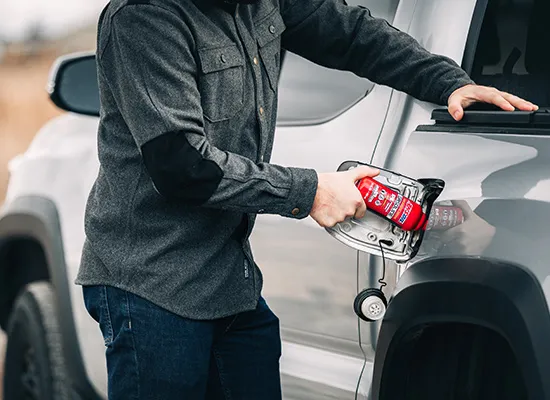
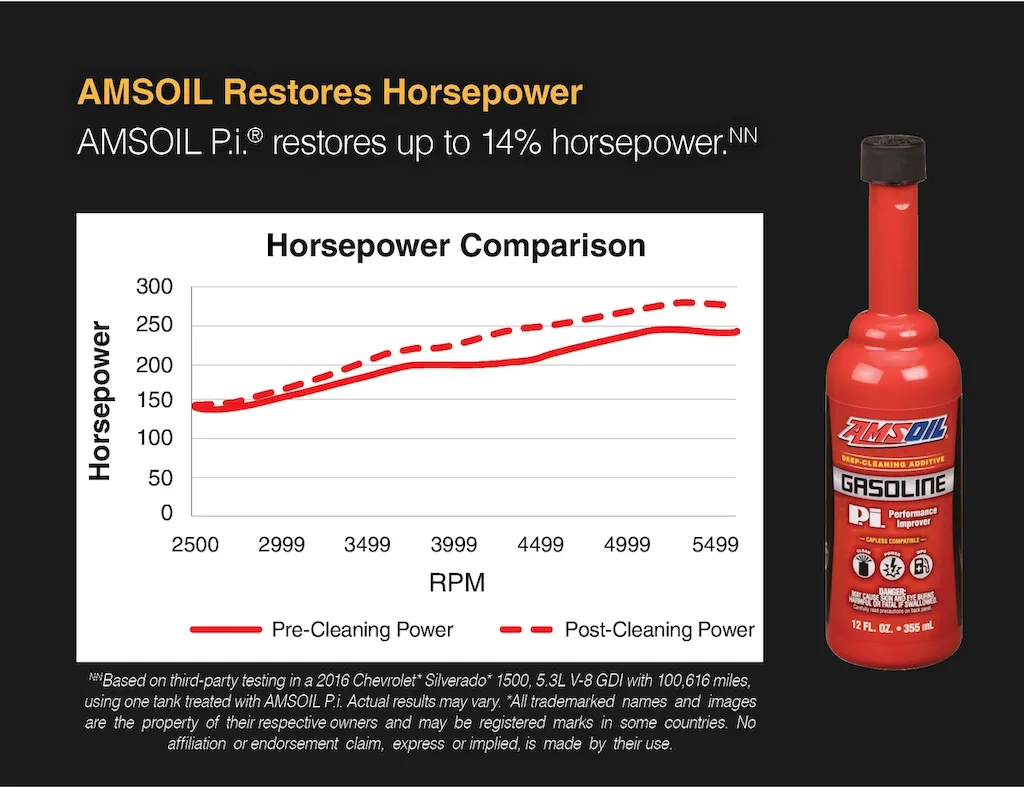
AMSOIL P.i. is a concentrated fuel-system detergent designed to clean injectors, intake valves, and combustion chambers — the three deposit hot spots that plague modern GDI engines. Independent testing on a 2016 Chevrolet Silverado with over 100,000 miles measured a 14% improvement in horsepower after a single treatment with P.i.2 P.i. also restores GDI fuel injectors to 100% flow rate after one tank of fuel.3
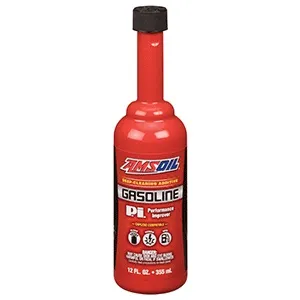
Buy AMSOIL P.i. Performance Improver
AMSOIL Upper Cylinder Lubricant
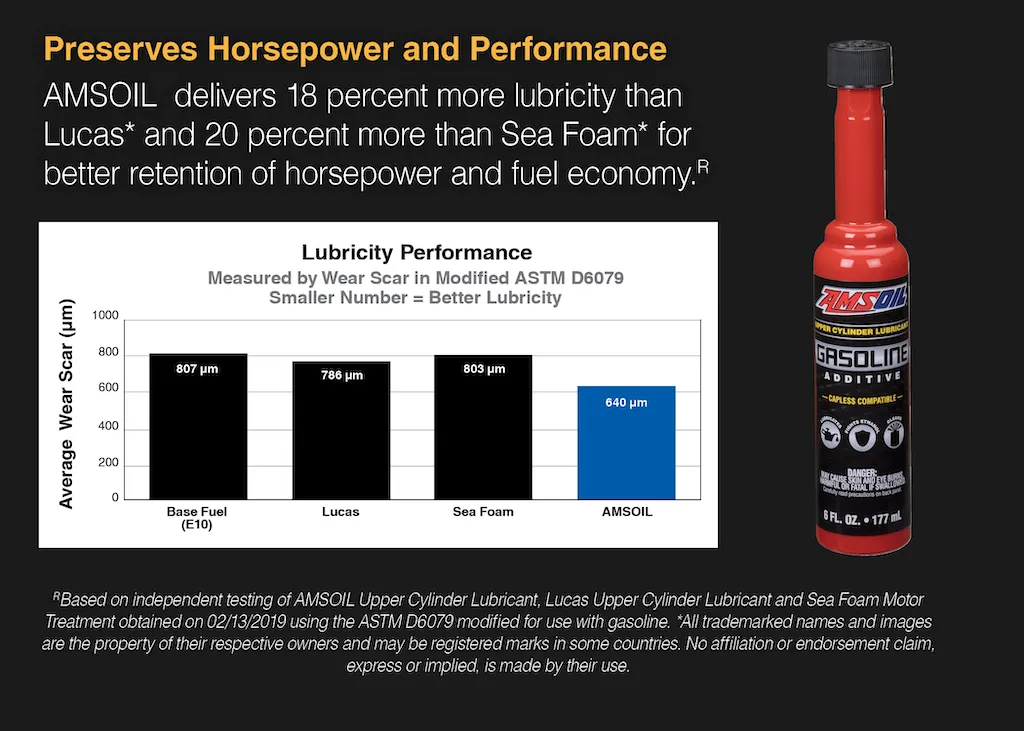
Upper Cylinder Lubricant addresses the top end of the cylinder — where the oil control rings can’t reach and combustion heat dries the bore. It lubricates the upper ring land and valve stems, fights ethanol-related corrosion in the fuel system, and keeps injectors clean. In independent lubricity testing (ASTM D6079 modified for gasoline) Upper Cylinder Lubricant delivered 18% more lubricity than Lucas and 20% more than Sea Foam.4
Buy AMSOIL Upper Cylinder Lubricant
For a deeper look at how P.i. and Upper Cylinder Lubricant work together, see our guide to the AMSOIL P.i. and UCL dynamic duo.
AMSOIL Engine and Transmission Flush
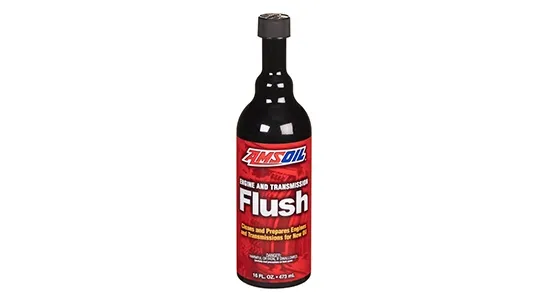
If you’ve inherited an engine with an unknown maintenance history — or you suspect sludge is already interfering with hydraulic lifters or VVT phasers — AMSOIL Engine and Transmission Flush safely loosens sludge, varnish, and sticky-valve deposits ahead of an oil change. Its detergent-based formula is safe on seals and can be disposed of with the waste oil.
Buy AMSOIL Engine and Transmission Flush
Valvetrain Maintenance Checklist
- Replace the timing belt at the mileage interval listed in your owner’s manual. A snapped belt in an interference engine bends valves.
- Check valve lash on engines that specify it (many solid-lifter and some OHC designs) at the OEM interval.
- Change the oil on time with a full-synthetic that meets the current API / ILSAC spec your engine calls for.5 The right viscosity is the one in your owner’s manual — see our guide to oil viscosity and engine oil specifications if you want the full background.
- Treat with AMSOIL P.i. every ~4,000 miles to keep intake valves, injectors, and combustion chambers clean — particularly important on GDI engines.
- Add AMSOIL Upper Cylinder Lubricant at every fill-up for ongoing top-end lubrication and ethanol-corrosion protection.
- Listen to the engine. Cold-start ticks, cam-correlation codes, and rough idle are your early-warning system. Investigate them instead of driving through them. For a real-world example of what happens when valvetrain and bottom-end issues compound, see our coverage of the GM 6.2L V8 recall and the related LSPI problem in modern turbocharged GDI engines.
Frequently Asked Questions
What is a valvetrain in simple terms?
A valvetrain is the set of engine parts that opens and closes the intake and exhaust valves in time with the pistons. It includes the camshaft, timing chain or belt, lifters, (pushrods and rocker arms in overhead-valve designs), valve springs, and the valves themselves. Its job is to let fresh air and fuel into each cylinder and let exhaust gases out at exactly the right moment.
What is the difference between OHV, SOHC, and DOHC?
OHV (overhead valve) engines put the camshaft in the block and use pushrods and rocker arms to actuate valves in the cylinder head — common in American V8s. SOHC (single overhead cam) engines place one cam above the valves in the head and eliminate pushrods. DOHC (dual overhead cam) engines use two cams per head — one for intakes and one for exhausts — which allows for more valves per cylinder and higher-RPM performance.
What does a lifter tick sound like and what causes it?
A lifter tick is a rhythmic clicking from the top of the engine that is often loudest at cold start. It is usually caused by a hydraulic lifter that has bled down or is not filling properly, by worn cam/lifter contact surfaces, or by oil that is too thin, aerated, or contaminated to support the lifter. Using the correct viscosity of a high-quality synthetic oil and changing oil on schedule is the single best protection.
What is variable valve timing (VVT) and why does it need clean oil?
Variable valve timing lets the engine advance or retard the camshaft on the fly to improve power, fuel economy, and emissions. The phasers that rotate the cams are driven by engine oil routed through tight-tolerance solenoids. Thickened, sludged, or contaminated oil blocks those passages and causes rough idle, poor fuel economy, and VVT fault codes — which is why VVT engines are unforgiving about oil quality and change intervals.
Why do timing chains stretch and how do I prevent it?
Timing chains stretch when the pins and bushings between links wear — usually accelerated by infrequent oil changes, fuel dilution, or low-quality oil that shears and loses film strength. A stretched chain alters valve timing, triggers cam/crank correlation codes, and can rattle at cold start. Using a full-synthetic oil with strong wear protection and changing it on time is the single biggest lever an owner has.
Does GDI (direct injection) cause valve problems?
Yes. In port-injected engines, fuel washes detergents across the back of the intake valves every stroke. In gasoline direct-injection (GDI) engines, fuel sprays directly into the cylinder and bypasses the intake valves — so crankcase vapors and EGR soot bake onto the valves as hard carbon. That carbon restricts airflow and causes misfires. A top-tier fuel with detergents plus a combustion-chamber cleaner like AMSOIL P.i. is the standard defense.
What is the best motor oil to protect my valvetrain?
A full-synthetic oil that meets your vehicle's current API SP / ILSAC GF-6 (or OEM-specific) specification and the correct viscosity in your owner's manual. AMSOIL Signature Series 100% Synthetic Motor Oil provides 75% more wear protection than required by the ASTM D6891 industry-standard test, which directly protects cams, lifters, and timing components.1
How often should I service my valvetrain?
Replace the timing belt at the interval listed in your owner's manual (timing chains are generally lifetime but still wear with poor oil care). Check valve lash at OEM-specified intervals on engines that use solid lifters. Change oil on time with a quality synthetic, and consider AMSOIL P.i. every ~4,000 miles plus AMSOIL Upper Cylinder Lubricant at every fill-up to keep deposits, corrosion, and GDI intake-valve carbon in check.
References
- AMSOIL — Based on independent testing of AMSOIL Signature Series 0W-20 using the ASTM D6891 Sequence IVA cam-lobe wear test standard (ASTM D6891).
- AMSOIL — Based on third-party testing in a 2016 Chevrolet Silverado 1500, 5.3L V-8 GDI with 100,616 miles on the odometer, using one tank of fuel treated with AMSOIL P.i. Actual results may vary.
- AMSOIL — ASTM D5598(M) test, 2013 Buick Regal test vehicle; see ASTM D5598.
- AMSOIL — Based on independent testing of AMSOIL Upper Cylinder Lubricant, Lucas Upper Cylinder Lubricant, and Sea Foam Motor Treatment, obtained 02/13/2019, using ASTM D6079 modified for use with gasoline.
- American Petroleum Institute — API Engine Oil Categories (API SP and ILSAC GF-6). Cited for oil-cleanliness, aeration, and deposit-control requirements relevant to hydraulic lifters and VVT phasers.
- ASTM International — ASTM D6891 Standard Test Method for Evaluation of Automotive Engine Oils in the Sequence IVA Spark-Ignition Engine (cam-lobe wear test, i.e. the boundary-lubrication interface between cam and lifter).
- American Petroleum Institute — API Oil Categories (API SP) — anti-wear chemistry minimums, oxidation resistance, and LSPI-protection requirements.
All trademarked names and images are the property of their respective owners and may be registered marks in some countries. No affiliation or endorsement claim, express or implied, is made by their use.
Register as an AMSOIL Preferred Customer
- Reduced pricing of up to 25% on every order
- Free shipping on orders of $100 ($130 Canada) or more
- Birthday gift of a $5 coupon
- $5 back with every $100 you spend
- Exclusive offers throughout the year
- Free membership renewal when you spend $500 or more
At National Synthetics we’ve been providing superior AMSOIL products and services to our customers for over a decade. Please reach out to us if we can answer any questions or help you choose the right products for your engine.
Recommended AMSOIL Products

Protect Your Engine with AMSOIL
Experience the difference premium synthetic lubricants make. Shop with confidence through your authorized AMSOIL dealer.
Browse AMSOIL Products