🎁 FREE LIGHTED MULTI-TOOL with $100 Order • Code: MULTI226 • Learn More →
How to Protect a Motorcycle Wet Clutch (and How it Works)
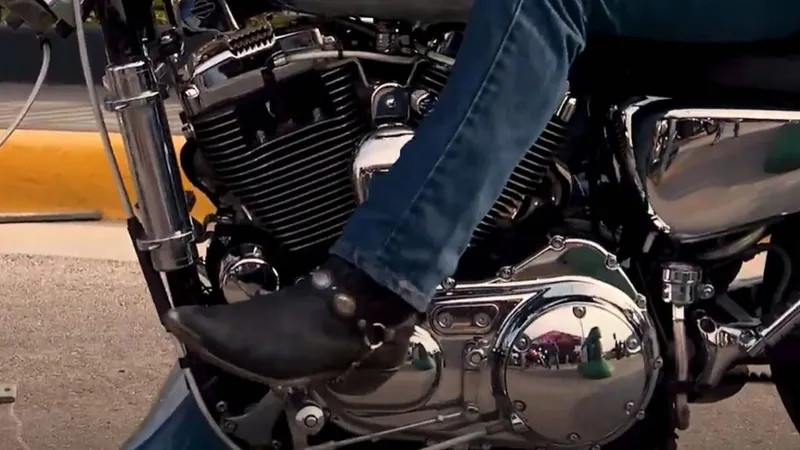
Motorcycle oil and dirt bike oil must be formulated with the correct frictional properties to ensure smooth, consistent shifts and optimal clutch performance.
Years ago, I owned a Honda 350 motorcycle with a clutch lever that frequently turned to mush and occasionally quit working altogether. I was constantly fiddling with the linkage, trying to take the slop out of the clutch lever. It never occurred to me that the oil used to lubricate the wet clutch could have been the problem. As we’ll see, oil plays a huge role in clutch feel and effectiveness. And, we’ll look at the best motorcycle oil for a wet clutch.

How a motorcycle wet clutch works
First, a few basics.
As shown in the images of a dirt bike wet clutch below, the clutch connects the engine and transmission via a series of alternating friction and steel plates.
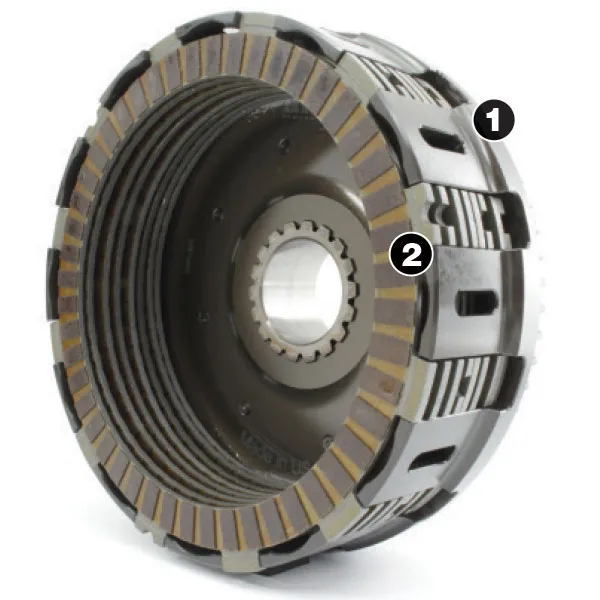
The clutch basket (1) is attached to the engine. Friction plates (2) are attached to the clutch basket via splines along their circumference.
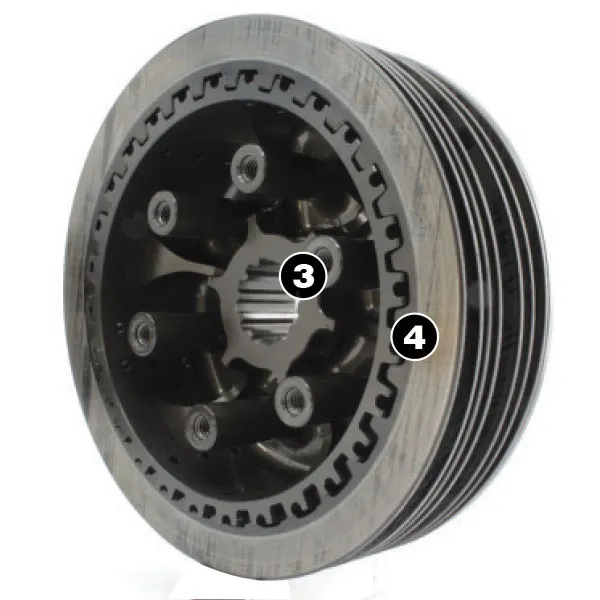
The hub (3) is attached to the transmission. Steel plates (4) are attached to the hub via splines on their inside opening.
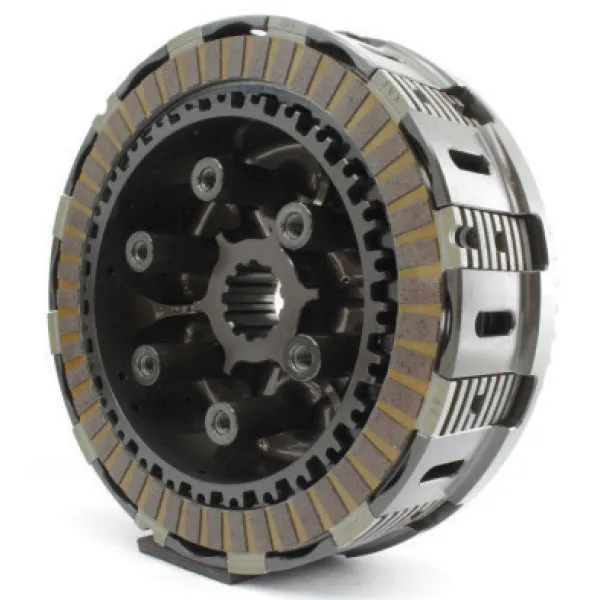
The hub fits inside the clutch basket and the friction and steel plates are woven together, connecting the two components and creating one assembly.
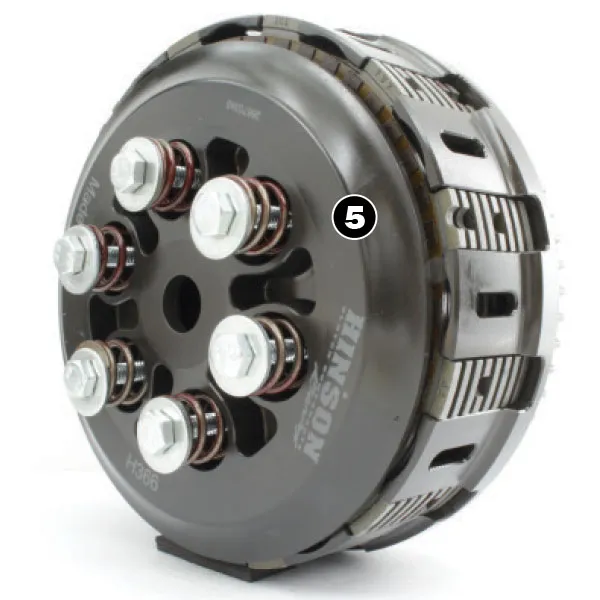
The pressure plate (5) squeezes the friction and steel plates together, binding the engine to the transmission and moving the bike. Squeezing the clutch lever relieves pressure, allowing the friction and steel plates to separate and rotate independently. Now the engine can idle without the bike moving.
Wet clutches are widely used in motorcycles and dirt bikes. The term simply means the clutch is lubricated with oil, as opposed to a dry clutch. Friction plays a big role in proper clutch operation.
To illustrate, imagine sitting aboard a motorcycle or dirt bike with the clutch lever activated, idling at a red light or in a starting gate.
The friction and steel plates are separated, allowing the bike to run without moving. The light turns green or the gate drops. As you let out the clutch lever, the plates squeeze together. The transition from the friction and steel plates spinning independently to becoming locked together is an example of dynamic friction. Once the plates are locked together and spinning in unison, they’re subject to the principles of static friction.

Oil vital to clutch performance
Motor oil plays a vital role in both areas.
The formulation influences the dynamic friction you experience, which is best thought of as clutch feel.Oils with incorrect frictional properties can result in inconsistent, or “loose,” clutch feel. This negatively affects your ability to confidently pull away from a red light without the bike cutting out, or start quickly and grab the holeshot in a race.
The oil also contributes to the holding power, or static friction, between the plates once the clutch lever has been let all the way out and you’re riding.
Oils with incorrect frictional properties can allow the plates to slip in some circumstances, which you’ll feel as lost power to the ground.A powerful V-twin riding up a hill, for example, can generate sufficient load to cause the clutch plates to slip and the bike to surge.

The oil’s additive chemistry has the greatest effect on performance. Friction modifiers, added to some passenger car/light truck motor oils to maximize fuel economy, can decrease the coefficient of friction within the clutch pack and result in excessive slippage. Extreme-pressure additives, commonly used in gear lubes to protect against shock loads and intense pressures, can cause excessive clutch slippage and related damage.
Best motorcycle oil for a wet clutch
The key is to use a lubricant specifically formulated for wet clutches, such as AMSOIL synthetic motorcycle and dirt bike oils.
BUY AMSOIL METRIC MOTORCYCLE OIL BUY AMSOIL SYNTHETIC DIRT BIKE OIL BUY DIRT BIKE TRANSMISSION FLUIDThey contain no friction modifiers or extreme-pressure additives. They’re dialed-in with the correct frictional properties to promote smooth shifts and consistent clutch feel while guarding against wear for long clutch life.
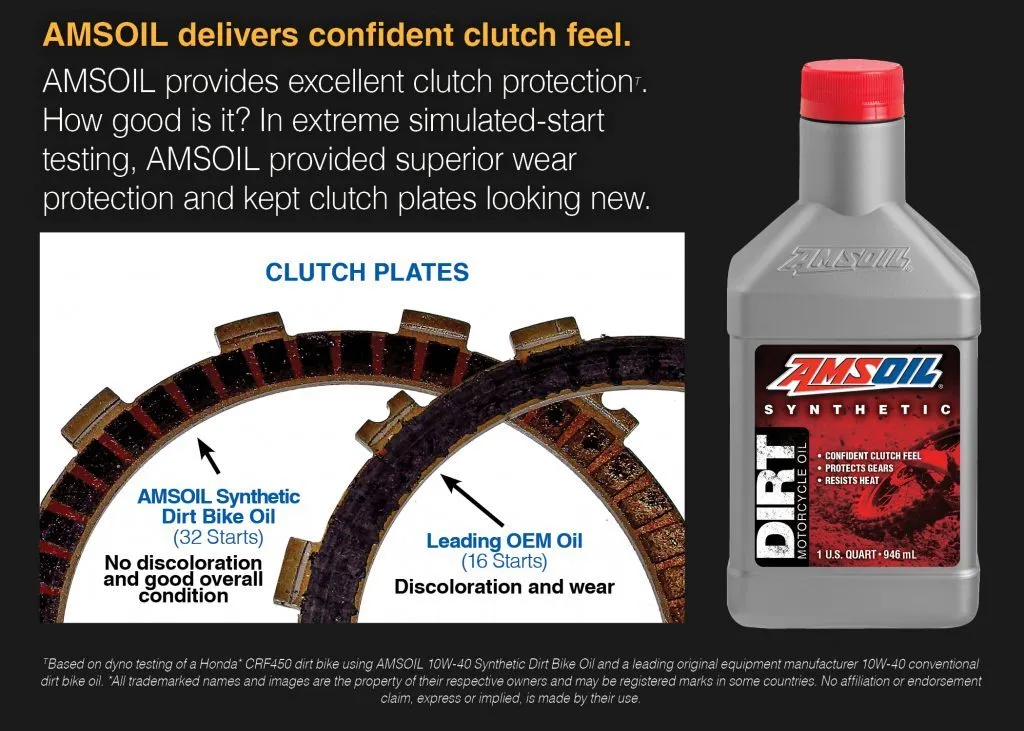
Using the best oil for a motorcycle or dirt bike wet clutch will help you focus on riding instead of wasting time on unplanned maintenance.
BUY AMSOIL SYNTHETIC MOTOR OIL Updated. Originally published July 19, 2017.Click HERE for more information on Wholesale Pricing !
BUY AMSOIL PRODUCTS WITH EASE!
Based on article by the INSIDE TRACK AMSOIL Blog March 4, 2021 | links added by National Synthetics staff
*All trademarked names and images are the property of their respective owners and may be registered marks in some countries. No affiliation or endorsement claim, express or implied, is made by their use.
Recommended AMSOIL Products for Wet Clutches
Metric Motorcycle Oils
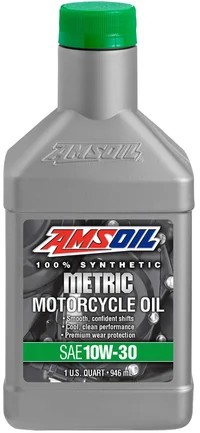
AMSOIL 100% Synthetic Metric Motorcycle Oil 10W-30
National Synthetics is an authorized AMSOIL dealer. Links earn us a commission at no extra cost to you. Full disclosure
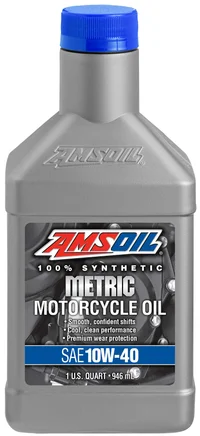
AMSOIL 100% Synthetic Metric Motorcycle Oil 10W-40
National Synthetics is an authorized AMSOIL dealer. Links earn us a commission at no extra cost to you. Full disclosure
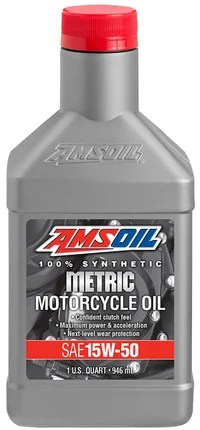
AMSOIL 100% Synthetic Metric Motorcycle Oil 15W-50
National Synthetics is an authorized AMSOIL dealer. Links earn us a commission at no extra cost to you. Full disclosure
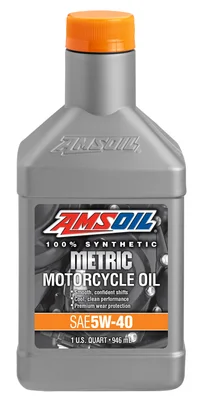
AMSOIL 100% Synthetic Metric Motorcycle Oil 5W-40
National Synthetics is an authorized AMSOIL dealer. Links earn us a commission at no extra cost to you. Full disclosure
Dirt Bike Oils

Protect Your Engine with AMSOIL
Experience the difference premium synthetic lubricants make. Shop with confidence through your authorized AMSOIL dealer.
Browse AMSOIL Products